












How does an Electric Parking Brake Work?
Auto technology has made some major leaps in recent years. Every new year, vehicles seem to be coming with new innovations. Integrated wireless charging pads, adaptive cruise control, 360-degree cameras—these are just a few recent innovations.
Another newer innovation is the electric parking brake (EPB). This modern alternative to the traditional handbrake is designed with safety and convenience in mind. If you’re considering upgrading your ride, it’s a good idea to make sure that you understand how EPB systems work so you can decide whether you want one in your new car. Keep reading to learn more about how this cool new technology works.
What Is an Electric Parking Brake?
Traditional parking brakes involve a system of cables and levers that keep a vehicle stationary when it’s parked. Usually, the driver pulls a lever upward or presses a pedal down to activate the brake. The emergency brake can be used anytime the vehicle is at rest, but is often used when parking on a hill or when the vehicle needs to be stopped in an emergency.
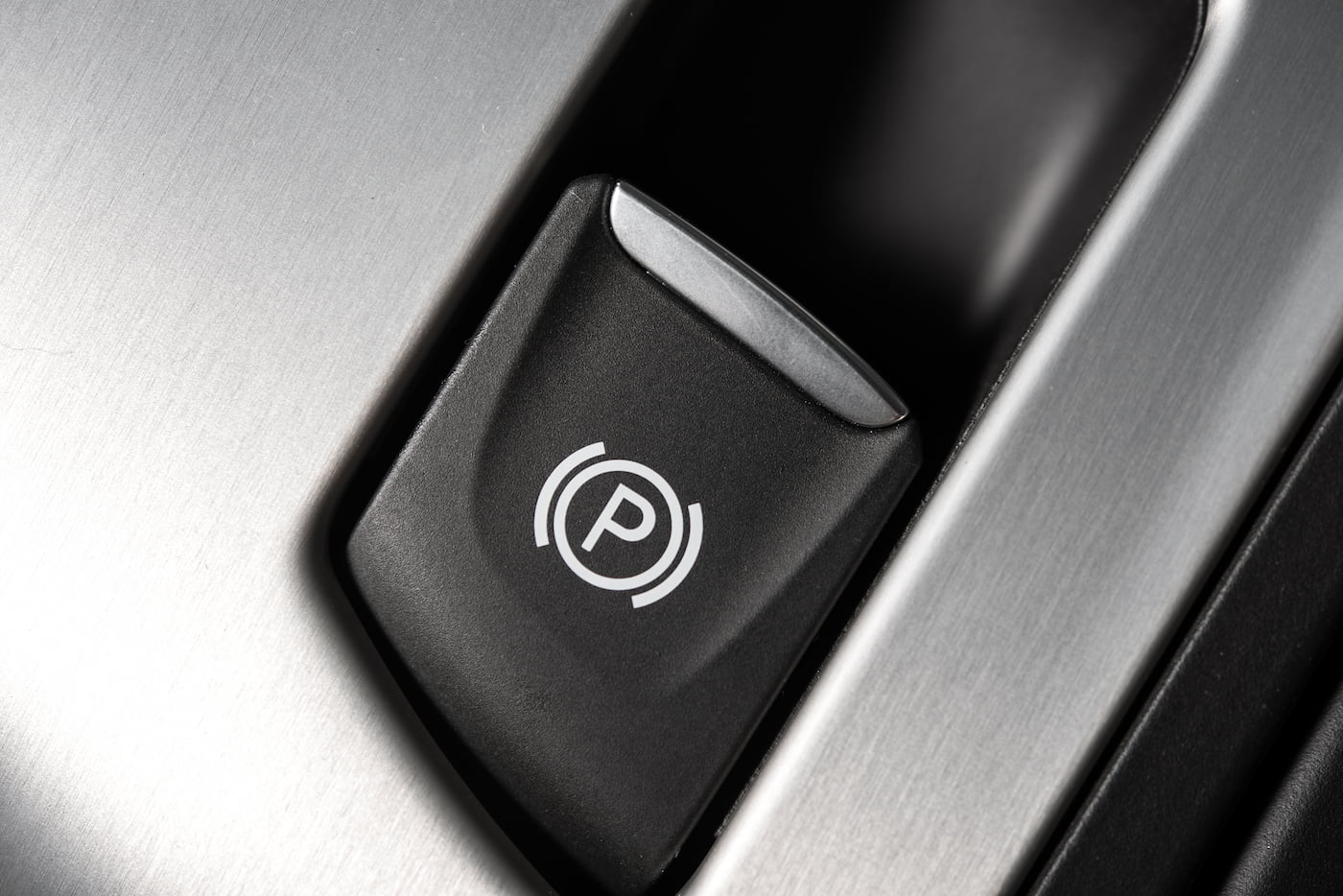
An electric parking brake is a system designed to replace traditional manual handbrakes. Instead of pulling a lever or pushing a pedal, the vehicle’s emergency brake is set by pressing a button or flipping a switch. Instead of cables activating the brake, with an EPB, an electronic control unit and an actuator mechanism apply the brakes.
While they’re becoming more common, electric parking brakes are most often found on modern sedans, SUVs, and luxury vehicles.
How Does an Electric Parking Brake Work?
Vehicles with electric parking brakes have a button or switch that drivers use to activate it. When you press the button or flip the switch, a signal is sent to the electronic control unit. This unit then sends a command to the actuator mechanism, causing it to apply the brake pads to the vehicle’s rear wheels.
Some vehicles come equipped with automatic parking brakes. This means that they activate every time an engine is turned off. Other vehicles have a feature that automatically releases the parking brake when the vehicle starts moving or reaches a certain speed, allowing drivers to avoid forgetting to release the brake and potentially causing damage.
Types of Electric Parking Brake Systems
There are two types of electric parking brake systems. The first is a cable-pull system. With this system, an electric motor pulls on a traditional brake cable to activate the brake. The other type is a caliper-integrated system. With this system, the motor is directly mounted on the brake caliper, and applies the brake when activated.
Benefits of Electric Parking Brakes
There are a number of benefits to electric parking brakes. The first is convenience! Applying or releasing a traditional parking brake can be tough on a hill. The ability to simply push a button makes the process of setting and releasing the brake easier.
With just a simple button or switch, you’ll also save cabin space when you don’t need a handbrake. Finally, automatically engaged electric parking brakes are a safety feature, as the brake is automatically applied, eliminating the risk of a driver forgetting to set it while parked on a steep hill.
Choosing Your Next Ride With Electric Parking Brakes
Electric parking brakes are a relatively new technology that offers convenience, saves space, and can make your car safer. This simple technology utilizes electric systems to set and release your brake instead of traditional cables.
Now that you know how electric parking brakes work, it’s time to start shopping for your next ride equipped with them. Mtn. View Hyundai has tons of new models equipped with electric parking brakes and other new technology. Stop by today for a test drive!
Connect with us


Recent Blog Entries
Categories
Mtn. View Hyundai
Address
6236 Alabama Hwy
Ringgold, GA 30736
Phone
- Sales 706-937-1123
- Service 706-935-4500
- Parts 706-935-4500
| Monday | 9:00AM - 7:00PM |
| Tuesday | 9:00AM - 7:00PM |
| Wednesday | 9:00AM - 7:00PM |
| Thursday | 9:00AM - 7:00PM |
| Friday | 9:00AM - 7:00PM |
| Saturday | 9:00AM - 6:00PM |
| Sunday | Closed |
| Monday | 7:30AM - 6:00PM |
| Tuesday | 7:30AM - 6:00PM |
| Wednesday | 7:30AM - 6:00PM |
| Thursday | 7:30AM - 6:00PM |
| Friday | 7:30AM - 6:00PM |
| Saturday | 7:30AM - 4:00PM |
| Sunday | Closed |
| Monday | 7:30AM - 6:00PM |
| Tuesday | 7:30AM - 6:00PM |
| Wednesday | 7:30AM - 6:00PM |
| Thursday | 7:30AM - 6:00PM |
| Friday | 7:30AM - 6:00PM |
| Saturday | 7:30AM - 4:00PM |
| Sunday | Closed |
