






Signs Your Oxygen Sensor Needs Replacement
Modern car engine control systems rely on several sensors to regulate emissions and other functions, including oxygen sensors. These sensors reduce fuel consumption, emissions, and other problems. A failing oxygen sensor can't work with a vehicle's computer to set the air-fuel ratio. It could cause lower fuel economy and damage to components like the catalytic converter.
Oxygen sensors have been required for cars since 1981, and vehicles made in 1996 or after have at least two oxygen sensors. The second one monitors the efficiency of the catalytic converter. Here's some information about vehicle oxygen sensors, signs they need replacement, and common causes of failure.
What Does an Oxygen Sensor Do?
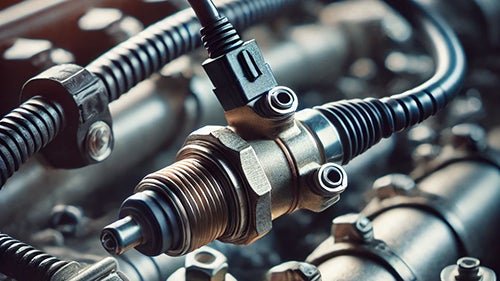
Oxygen sensors monitor unburned oxygen levels in exhaust gases. They're inside the exhaust manifold, a part which collects air and fuel from the engine cylinders. Some cars have up to four oxygen sensors, one in each cylinder bank and one near each catalytic converter. Oxygen sensors communicate with vehicles' electronic control units (ECUs) to determine optimal air-fuel ratio.
If an oxygen sensor fails, your vehicle could have serious problems.
Check Engine Light Turns On
Vehicles don't have warning lights for malfunctioning oxygen sensors, but the check engine light on the dashboard can alert you. Rough idling or stalling caused by too much air or fuel could cause the ECM to activate the check engine light.
You can use an OBD-II scanner to look at an oxygen sensor. Select the “O2 Sensor Test” or “Live Data” options. Healthy sensors should have levels between 0.1 and 0.9 volts. If you don't have a scanner, a certified technician from our service department can examine your sensor for you.
Poor Fuel Efficiency
A malfunctioning oxygen sensor could make a vehicle less efficient. The engine control module (ECM) may not calculate the air-fuel ratio correctly. This can lead to incorrect ignition timing or fuel injection.
Rough Idling and Engine Misfires
Rough idling is additional engine noise and vibrations when a vehicle isn't moving.
An engine misfire happens when one or more cylinders don't combust fuel properly, sometimes from not producing a spark. This keeps the fuel-air mixture from igniting or burning completely. You could also notice stalling or poor acceleration.
Increased Vehicle Emissions
A bad oxygen sensor (O2 sensor) can lead to incorrect fuel-air mixture adjustments. Too much fuel leads to incomplete combustion and higher pollutants such as carbon monoxide. Too little fuel can raise nitrogen oxide emissions, contributing to respiratory issues.
Unusual Engine Sounds
An incorrect fuel-air mixture could cause premature ignition and uncontrolled combustion. This makes a knocking or pinging sound, and it can cause engine damage.
Rotten Egg Smell from Exhaust
If the exhaust from your car smells like rotten eggs or sulfur, a bad oxygen sensor could be keeping your vehicle's catalytic converter from working properly.
Causes of Oxygen Sensor Failure
Oxygen sensors often fail from normal wear and tear. Most last 60,000 to 90,000 miles. Oxygen sensors can also fail from exposure to extreme temperatures or contaminants like oil, coolant, or carbon buildup.
If you think your oxygen sensor could be the cause of your check engine light coming on or any other problem with your vehicle, schedule a diagnostic appointment with our service department so our expert technicians can give you their valued opinion.
Mtn. View Hyundai
Address
6236 Alabama Hwy
Ringgold, GA 30736
Phone
- Sales 706-937-1123
- Service 706-935-4500
- Parts 706-935-4500
| Monday | 9:00AM - 7:00PM |
| Tuesday | 9:00AM - 7:00PM |
| Wednesday | 9:00AM - 7:00PM |
| Thursday | 9:00AM - 7:00PM |
| Friday | 9:00AM - 7:00PM |
| Saturday | 9:00AM - 6:00PM |
| Sunday | Closed |
| Monday | 7:30AM - 6:00PM |
| Tuesday | 7:30AM - 6:00PM |
| Wednesday | 7:30AM - 6:00PM |
| Thursday | 7:30AM - 6:00PM |
| Friday | 7:30AM - 6:00PM |
| Saturday | 7:30AM - 4:00PM |
| Sunday | Closed |
| Monday | 7:30AM - 6:00PM |
| Tuesday | 7:30AM - 6:00PM |
| Wednesday | 7:30AM - 6:00PM |
| Thursday | 7:30AM - 6:00PM |
| Friday | 7:30AM - 6:00PM |
| Saturday | 7:30AM - 4:00PM |
| Sunday | Closed |
